Affiliate marketing has become one of the most popular ways to earn money online. Whether you’re a beginner looking for a side hustle or an entrepreneur aiming to build a scalable income stream, understanding how affiliate marketing works is essential.
In this complete step-by-step guide, you’ll learn everything you need to know—from the basics to advanced strategies—to successfully start and grow your affiliate marketing business.
What Is Affiliate Marketing?
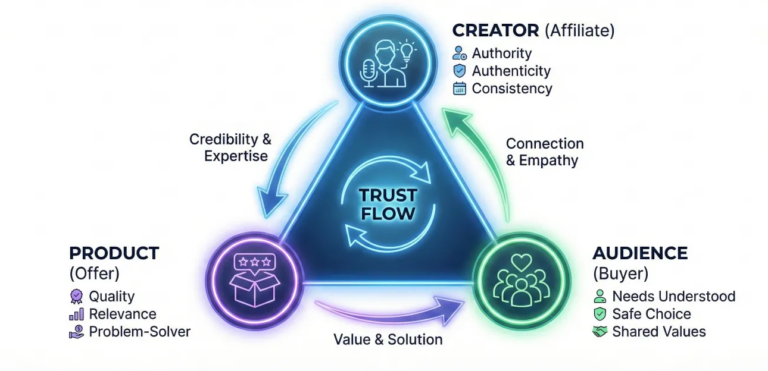
Affiliate marketing is a performance-based business model where individuals (affiliates) earn commissions by promoting products or services offered by other companies.
Instead of creating your own product, you act as a middleman. You recommend products through unique affiliate links, and when someone makes a purchase through your link, you earn a commission.
Key Players in Affiliate Marketing
There are four main components in the affiliate marketing ecosystem:
- Merchant (Advertiser)
The company or individual who owns the product or service. - Affiliate (Publisher)
The person who promotes the product and earns commissions. - Consumer (Customer)
The person who buys the product through the affiliate’s link. - Affiliate Network (Optional)
A platform that connects affiliates with merchants and tracks commissions.
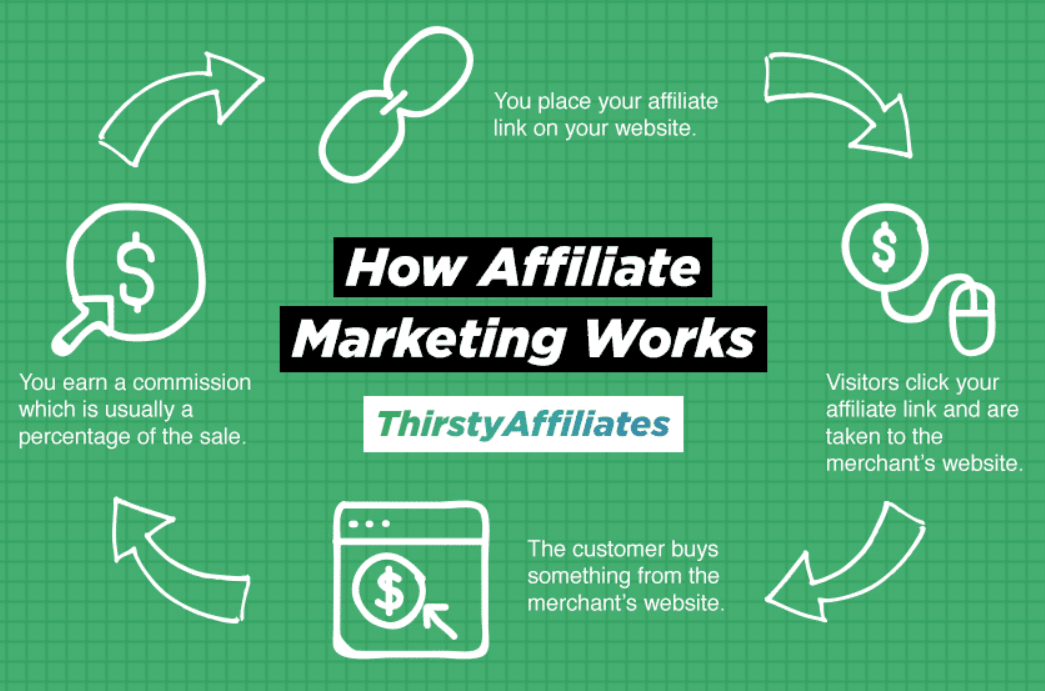
How Affiliate Marketing Works (Step-by-Step)
Let’s break down the affiliate marketing process into simple steps so you can understand exactly how money flows in this model.
Step 1: Join an Affiliate Program
The first step is to sign up for an affiliate program. Many companies offer affiliate opportunities, either directly or through networks.
Once approved, you’ll get access to a dashboard where you can generate unique affiliate links.
Step 2: Get Your Unique Affiliate Link
Each affiliate receives a unique tracking link. This link contains an ID that identifies you as the referrer.
Example:
This link ensures that any sales generated through it are credited to your account.
Step 3: Promote the Product
Next, you promote the product using various channels such as:
- Blog posts
- YouTube videos
- Social media platforms
- Email marketing
- Paid advertising
Your goal is to drive targeted traffic to your affiliate link.
Step 4: User Clicks the Link
When a user clicks your affiliate link, a tracking cookie is stored in their browser. This cookie typically lasts from 24 hours to 90 days, depending on the program.
Step 5: Customer Makes a Purchase
If the user buys the product within the cookie duration, the system tracks the sale and attributes it to you.
Step 6: Earn Commission
After the sale is confirmed, you receive a commission. Payments are usually made weekly, bi-weekly, or monthly.
Types of Affiliate Marketing Models
Understanding the different models helps you choose the best strategy.
1. Pay-Per-Sale (PPS)
You earn a commission only when a sale is completed. This is the most common model.
2. Pay-Per-Click (PPC)
You get paid for every click you generate, regardless of whether a sale occurs.
3. Pay-Per-Lead (PPL)
You earn money when users complete specific actions, such as signing up or filling out a form.
Choosing the Right Niche
Your niche determines your success in affiliate marketing. A niche is a specific topic or market segment you focus on.
How to Pick a Profitable Niche
- Choose something you’re interested in
- Ensure there is demand
- Check competition levels
- Look for affiliate programs in that niche
Popular Affiliate Marketing Niches
- Finance (loans, credit cards)
- Health and fitness
- Technology and gadgets
- Online education
- Digital marketing
Best Platforms for Affiliate Marketing
You don’t need a website to start, but having one gives you more control and long-term benefits.
1. Blogging (Website)
Creating SEO-optimized content is one of the most sustainable strategies.
Benefits:
- Long-term traffic
- Passive income potential
- High trust with audience
2. YouTube
Video content is highly engaging and converts well.
Tips:
- Create product reviews
- Tutorials
- Comparison videos
3. Social Media
Platforms like Instagram, TikTok, and Facebook can drive massive traffic.
4. Email Marketing
Building an email list allows you to promote offers repeatedly without relying on algorithms.
How to Drive Traffic to Affiliate Links
Traffic is the lifeblood of affiliate marketing. Without visitors, you won’t make sales.
Free Traffic Methods
- Search Engine Optimization (SEO)
- Social media marketing
- Content marketing
- Forum participation
Paid Traffic Methods
- Facebook Ads
- Google Ads
- Native ads
- Influencer marketing
SEO Strategies for Affiliate Marketing
Search engine optimization helps you rank higher on Google and get free organic traffic.
Keyword Research
Find keywords with:
- High search volume
- Low competition
- Buyer intent (e.g., “best laptop under $1000”)
On-Page SEO
- Use keywords in titles and headings
- Optimize meta descriptions
- Add internal and external links
Content Optimization
- Write in-depth articles (1500–3000 words)
- Use images and videos
- Answer user questions clearly
Creating High-Converting Content
Content is what drives conversions in affiliate marketing.
Types of Content That Work
- Product Reviews
- Comparison Articles
- How-To Guides
- Listicles (Top 10 Products)
Tips for Better Conversions
- Be honest and transparent
- Highlight pros and cons
- Use clear call-to-actions (CTA)
- Include real-life examples
Common Mistakes to Avoid
Many beginners fail because they make avoidable mistakes.
1. Choosing the Wrong Niche
Avoid niches with no demand or extremely high competition.
2. Promoting Too Many Products
Focus on a few high-quality offers instead of promoting everything.
3. Ignoring SEO
Without SEO, your content may never be discovered.
4. Lack of Trust
Always disclose affiliate links and build credibility with your audience.
Tools for Affiliate Marketers
Using the right tools can significantly improve your efficiency.
Essential Tools
- Keyword research tools
- SEO optimization plugins
- Email marketing platforms
- Analytics tools
How Much Can You Earn?
Affiliate marketing income varies widely depending on effort, niche, and strategy.
Beginner Level
- $0 – $500/month
Intermediate Level
- $500 – $5,000/month
Advanced Level
- $5,000 – $50,000+/month
Some top affiliates earn six or even seven figures annually.
Scaling Your Affiliate Marketing Business
Once you start making money, it’s time to scale.
Strategies to Scale
- Create more content
- Target additional keywords
- Build an email list
- Invest in paid ads
- Outsource content creation
Affiliate Marketing vs Other Online Business Models
Affiliate Marketing
- No product creation
- Low startup cost
- Passive income potential
Dropshipping
- Requires customer support
- Inventory management
- Higher risk
Freelancing
- Active income
- Time-based work
Affiliate marketing stands out due to its scalability and passive income potential.
Legal and Ethical Considerations
To build a sustainable business, follow ethical practices.
Disclosures
Always inform your audience that you earn commissions from affiliate links.
Compliance
Follow regulations such as:
- FTC guidelines
- GDPR (if targeting EU users)
Step-by-Step Action Plan for Beginners
If you’re just starting, follow this simple roadmap:
- Choose a niche
- Join affiliate programs
- Create a website or platform
- Publish high-quality content
- Drive traffic (SEO + social media)
- Optimize for conversions
- Scale your efforts
Future of Affiliate Marketing
Affiliate marketing continues to grow as more businesses move online.
Trends to Watch
- AI-driven content creation
- Influencer marketing expansion
- Video content dominance
- Voice search optimization
Conclusion
Affiliate marketing is one of the most powerful ways to earn money online. By understanding how it works and following a structured approach, you can build a profitable and sustainable income stream.
The key to success lies in consistency, quality content, and continuous learning. Whether you’re starting with zero experience or looking to scale your existing business, affiliate marketing offers endless opportunities.